The 3-Check
Answers: How do I know this document is actually the thing I should be relying on right now?
An AI-sourced or AI-summarized document is about to inform a decision, a filing, or an answer to someone else.
Specimen 07Rev A · two rooms
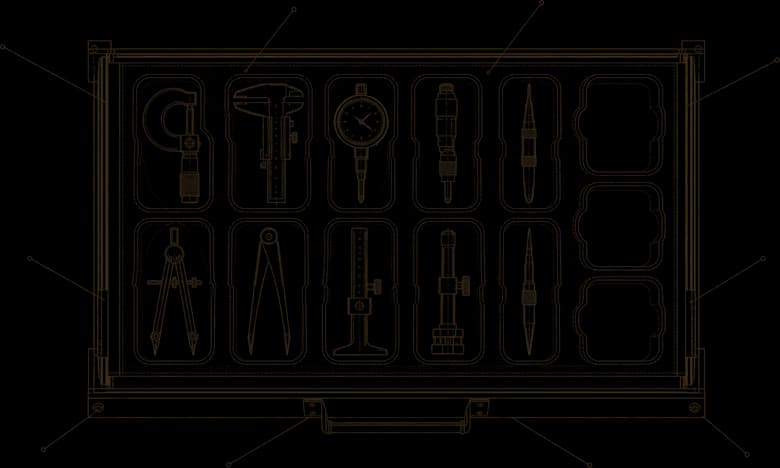
Identification key
The instruments vary; the shape does not. The mechanic names what structurally produces the insight — if you cannot state it in one line, it is not an instrument yet, it is a discussion topic. Came from carries the room it was born in, which is the part a competitor cannot fake.
Answers: How do I know this document is actually the thing I should be relying on right now?
An AI-sourced or AI-summarized document is about to inform a decision, a filing, or an answer to someone else.
Answers: Where am I actually on the path from using AI to having a system, and what's the one next thing to do about it?
Someone wants to get better at AI with no sense of what that would concretely mean for them this quarter.
Answers: Do we actually have an outcome here, or just something that looks like one?
A team presents a win and nobody in the room can quite say who is better off because of it.
Answers: Can I actually trust this AI-produced assessment, or does it just sound authoritative?
A tool hands back a summary, a finding, or a risk assessment, and the instinct is to accept it because it reads clean.
Answers: Could this definition of success be satisfied by a team that did nothing of value?
A metric or a definition of done keeps getting hit and the room still isn't sure anything real happened.
Answers: How do I defend our AI pace to the person who thinks we're too slow, and to the person who thinks we shipped too fast, without changing my story?
You're about to walk into a room that will push from one of those two directions and you don't have your three sentences ready.
Answers: Which of our nine AI habits is actually working, and which one is quietly setting our pace?
Leadership wants an AI maturity number and nobody in the room trusts the one a vendor would hand them.
Answers: What actually belongs in the context we hand the model, and whose call is that?
A team keeps adding to a prompt or a project's context and the outputs are getting worse, not better, and nobody can explain why.
Answers: Why does our workflow have this many steps, and which ones actually produce the outcome we want?
A process has accumulated steps over time and nobody can explain what several of them are still for.
Answers: When something went wrong with AI-assisted work, was it an augmentation failure, an acceleration failure, or an interpretation failure, and are we fixing the right one?
A post-mortem is underway and the instinct is to blame the AI as a single undifferentiated cause.